Where the time goes, the margin goes.
We measure where your hours go and what each one costs, then build whatever wins them back: a system that records the work, an agent that watches the line, or a change to how the week is scheduled. It is the service where the other three land.
The plan is made in an office. The work happens somewhere else.
A machine is down, a batch failed inspection, and a supervisor has already worked around both without telling anyone, because working around it is the job. None of it reaches you in time.
By the time it appears in the monthly summary it is history, and the margin it cost went with it. Winning that margin back starts with measuring what happened close to when it happened, in front of somebody who can correct it the same day.
This is where the other three services land. The system that replaced the spreadsheets records what happens in the process, the agents review what nobody has time to review by hand, and with the definitions already agreed a director reads the figure the same day. Each piece is worth having on its own. Together is where the margin moves.
Select a station to make it the constraint.
Machining is the constraint. Everything upstream queues behind it, and everything downstream sits idle.
The line can only run as fast as its slowest station. Move the constraint and the whole number moves, which is why measuring it matters more than optimizing everything at once.
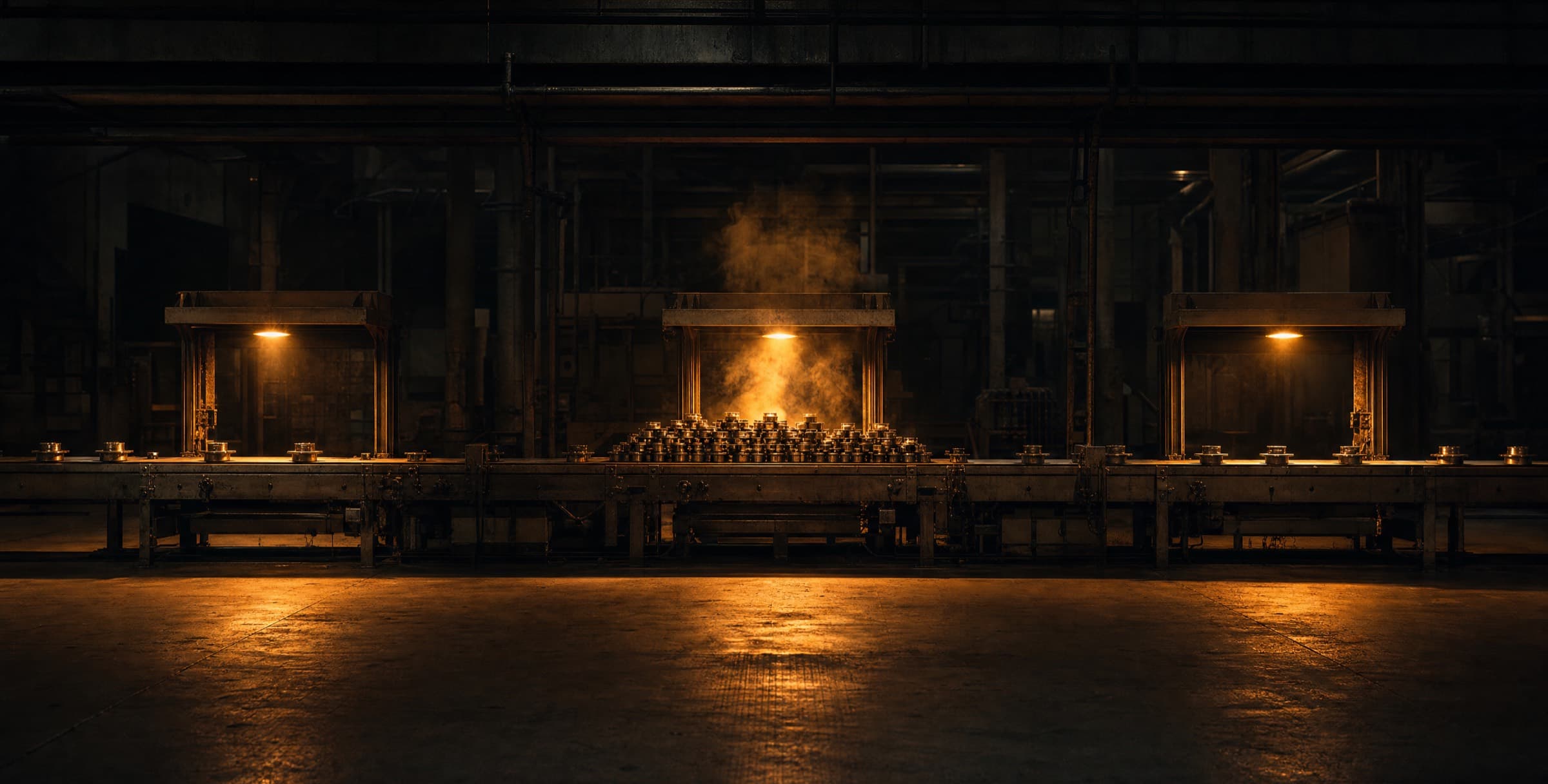
The real process happens here, and it is rarely the one written in the manual.
We start with the process.
You cannot design this from a conference room: the manual and the real process rarely match.
- 101
Walk the process
We follow the work as it runs today, including the workarounds that never made it into the manual. Everything else comes from that: what people do is the requirement, and what the manual says is a hypothesis.
- 202
Measure
Recording at the point of work, in seconds, on the device people already carry. If it adds a minute to the job, it will not be used.
- 303
Make it visible
On the line first, for the people who can correct it within the hour, then in the director's view, for the people who plan the month.
- 404
Tune
With the slowest station named, you unblock it and measure again, because the constraint always moves somewhere else.
From the line to the decision.
Built for the person doing the work: standing up, hands busy, in a hurry.
Production tracking
What ran, how much, how long it stopped and why, recorded at the line while somebody can still see the machine.
Scheduling and capacity
Plans that account for the constraints that bind: changeover time, labor, and the machine everyone knows is unreliable.
Quality and inspection
Checks, defect capture and traceability, with photographic evidence attached to the batch record, where an auditor can find it.
Maintenance and downtime
Why a line stopped, how often, and what it cost, recorded consistently enough that you can argue with it at a budget meeting.
Computer vision on the line
Where a camera genuinely beats a person: counting, presence and absence, surface defects, and safety compliance that nobody wants to police manually.
Traceability
Batch to shipment and back again, for the day a customer, an auditor or a regulator asks, and they will ask on the worst possible day.