Your Records Know More Than Your Systems Do
The answer is usually already in the business, sitting in a spreadsheet, an inbox, or a database nobody has opened in years. Novyant builds the systems and the AI that can reach it, and we stay to operate them.
Two ways we work.
Platforms we have already built and can put in front of you, and engagements where we build for the way your organization runs.
Platforms
Services
AI Automation & Agents
Agents and document pipelines that absorb repetitive work.
Systems Modernization
Replace spreadsheets and legacy tools with software that holds.
Data & Analytics
The reporting layer your decisions depend on.
Operations & Industrial Optimization
Throughput, scheduling and quality on the production floor.
One system for an operation that ran on five.
Our deepest deployment: a claims investigation group processing roughly 25,000 claims a year, across 28 legal entities, on a single platform we still operate.
Intake to closure, as one continuous record
One record carries a claim through all six stages. Nothing is re-entered on the way, so an adjuster can open a case and read its position straight off the screen, at any hour, without calling anyone to reconstruct it.
- Six stages, each with its own required evidence
- The system derives status from the work itself
- 200+ fields tracked and analysed per case, captured once
- Intakecomplete
- Inspectioncomplete
- Documentsin progress
- Reportpending
- Settlementpending
- Billingpending
A claims-investigation group · 28 legal entities · 8 offices · Mexico
- Claims processed per year
- 25,000Claims processed per year
- Concurrent users across 7 roles
- 300Concurrent users across 7 roles
- Legal entities unified
- 28Legal entities unified
- Insurance clients served
- 24+Insurance clients served
One engagement, in production today. The numbers below describe this system, not our whole business.
Four ways into an operation.
More often the work starts narrower than a platform: one part of how an organization runs, rebuilt so it holds, and then operated.
AI Automation & Agents
Read, scored and filed. A person only sees the ones the system is genuinely unsure about.
Systems Modernization
The workbook that quietly became infrastructure, replaced while the business it carries keeps running.
Data & Analytics
One number, and everyone in the room can say where it came from.
Operations & Industrial Optimization
What happened on the line, close enough to the moment that somebody can still act on it.
“Novyant gave us one operation we can actually see.”
Every insurer we work for has its own way of working, its own forms and its own reporting, and we had nowhere to see all of it at once. A case now takes us more than 60% fewer hours than it used to.
Almost any question now has an answer the person who needs it pulls for themselves in seconds, rather than asking and waiting a day: an adjuster's load, an office's month, where a single claim stands. We understand how each of our people and the group as a whole is performing in a way we simply could not before.
And the security work took us past what our sector asks for. When the most demanding audits came, we were ready for them.
The cost of an outdated system is paid every single day.
It is paid in data typed twice. In reports assembled by hand the night before they are due. In a question that should take a second and instead takes a week, because the answer lives in eleven spreadsheets and one person's memory.
For a long time that was tolerable, because replacing the system was genuinely expensive, genuinely risky and genuinely slow. Most organizations did the arithmetic and decided to live with it. They were not wrong.
That arithmetic no longer holds. What used to take a large team a year now takes a small team a quarter. Software can read a document, reconcile an account and draft the report someone used to lose an afternoon to. The constraint was never ambition. It was cost, and that constraint is gone.
Running your operation on a spreadsheet is now a choice.
We build it, then we run it.
Most of the risk sits in decisions made before anyone writes a line of code. We spend real time there, and we do not hand you a system and disappear.
- 01
Diagnose
We map how work moves through your organization, which is rarely how the org chart says it does. This is where most projects are quietly lost.
- 02
Design
A target architecture and a delivery sequence that puts something useful in front of your people long before the build is finished.
- 03
Build
A small team, short cycles, and working software in front of your people early enough that their feedback still changes the outcome.
- 04
Operate
We put it into production and stay accountable for it running. Software nobody owns degrades, and the handover is where most of these projects die.
In the spotlight
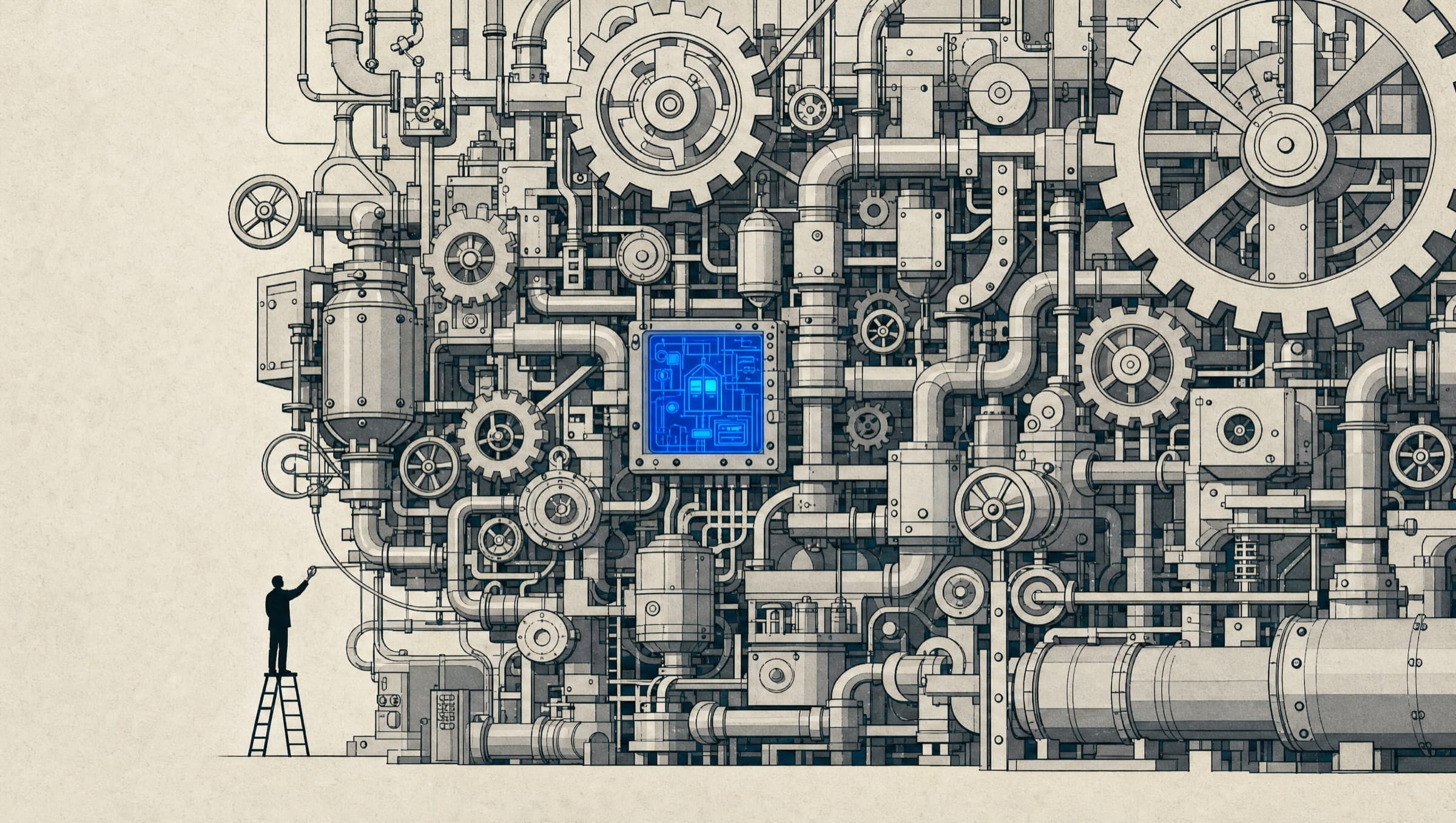 Systems Modernization
Comprehension debt: what happens when nobody understands the code that ships
Almost every organization now runs machine-written code in production. The interesting question was never whether a model can write it. It is who will be able to change it in eighteen months, at 2am, during an incident.
July 30, 2026 · 5 min read AI Automation
Enterprise AI agents doubled in four months. Governance did not.
Deployments roughly doubled between December and April. Monitoring coverage moved about five points, and 85% of organizations still cannot name a person accountable for what an agent does. The gap is the whole story.
July 29, 2026 · 7 min read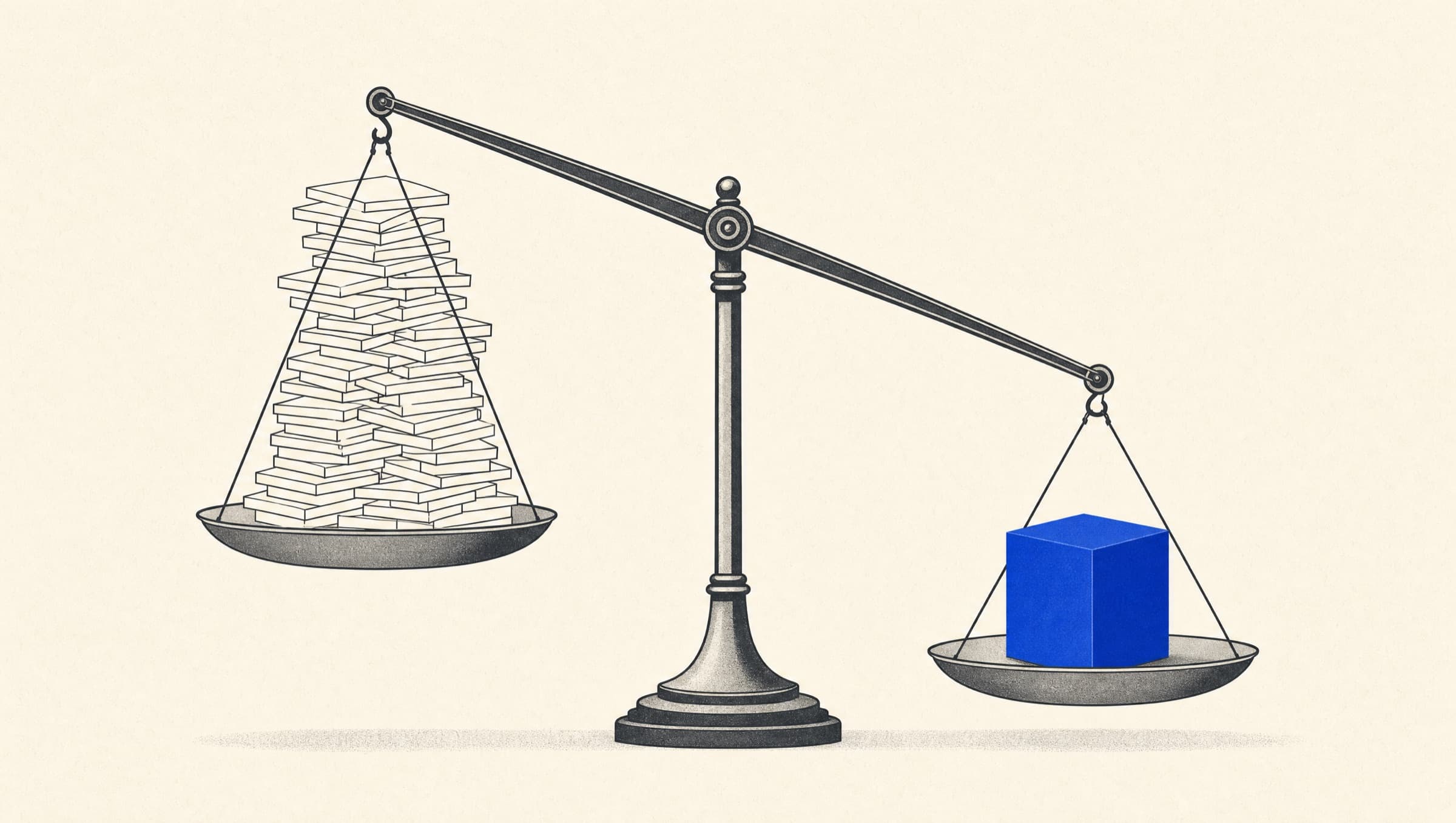 Systems Modernization
Build versus buy in 2026: what changed, and what absolutely did not
The cost of building collapsed, so the answer flipped for a whole category of software. It did not flip for all of it, and the projects that fail now fail for exactly the same reason they failed in 2015.
July 27, 2026 · 5 min read Systems Modernization
The integration tax is falling, and it changes which projects are worth doing
For twenty years, connecting systems to each other was the most expensive line in the estimate and the reason most good ideas died. In 2026 that line got dramatically cheaper. Very few organizations have re-run the numbers.
July 24, 2026 · 6 min read